I did not come to chess completely cold. I have memories of playing against my father as a kid, and he beat me every single time. Life moved on, other things took over, and with no one else around to play with, the game just kind of faded away. So when I picked the game back up about a month ago, it felt like returning to something I never really got to finish.
That return got a lot more meaningful on Easter Sunday this year. My dad and I sat down for two games on a Mario-themed chess board, somewhere in the middle of this whole month of learning and grinding on Chess.com. We drew both games. I made a big deal of it. For someone who grew up on the losing end of every single game we ever played, two draws felt like a real milestone.
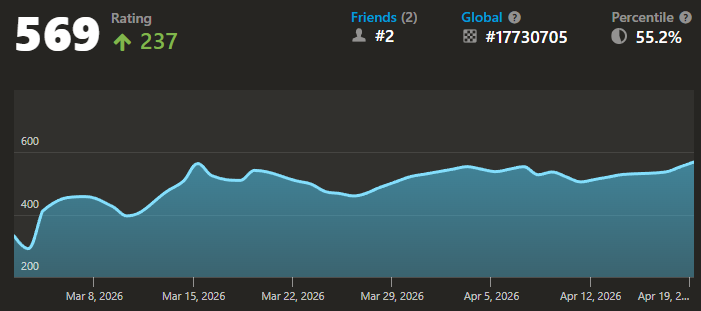
I created my Chess.com account on March 3rd with a starting Elo of 332 and essentially no real framework for the game beyond the basic rules. What followed was nothing short than a humbling experience.
The Early Climb
The first couple of weeks were a rush. I was learning openings, picking up patterns, and watching my rating climb. By March 16th, I had pushed my Elo up to 564. I did not fully appreciate what that number meant at the time. It only became a milestone in hindsight, once the weeks that followed turned it into a wall I could not seem to get back over.
For weeks after that peak, I could not break through. I would get close, lose a string of games, and find myself right back where I started. 564 started to feel less like a milestone and more like a ceiling. That stretch lasted until today, April 20th, 2026, when I finally pushed past it.
The Opening Trap
Here is what I think happened during that plateau, and it is something I suspect a lot of new players run into. I became obsessed with openings.
As black, I play the Sicilian Defense when white opens with e4 (1. e4 c5), and shift into a Queens Pawn structure when they go d4 (1. d4 d5). As white, I open with the King’s Pawn and usually follow up with an early knight development into the Knight Variation (1. e4 e5 2. Nf3). These give me a consistent starting point and a clear plan for the first few moves of almost any game.
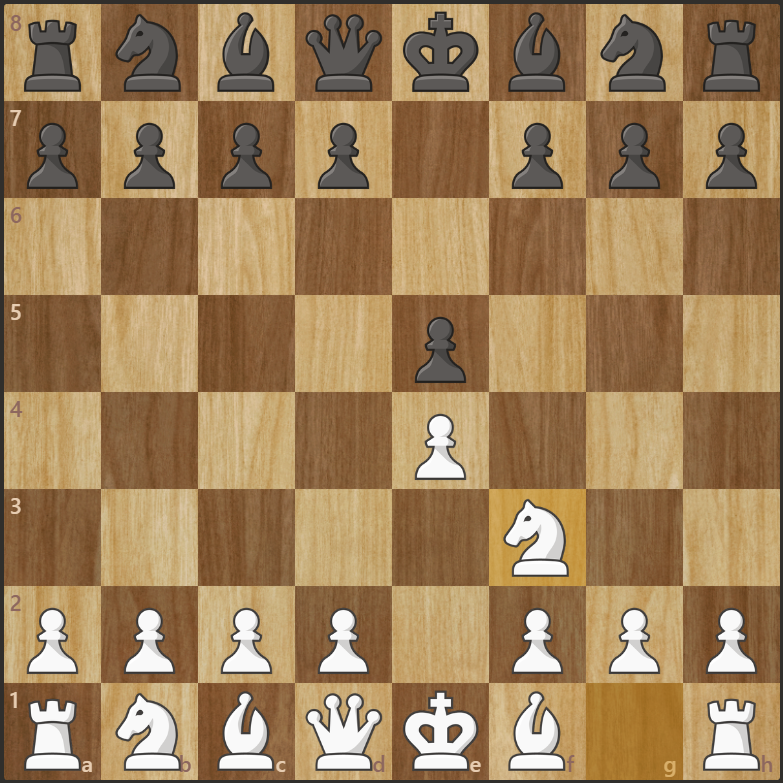
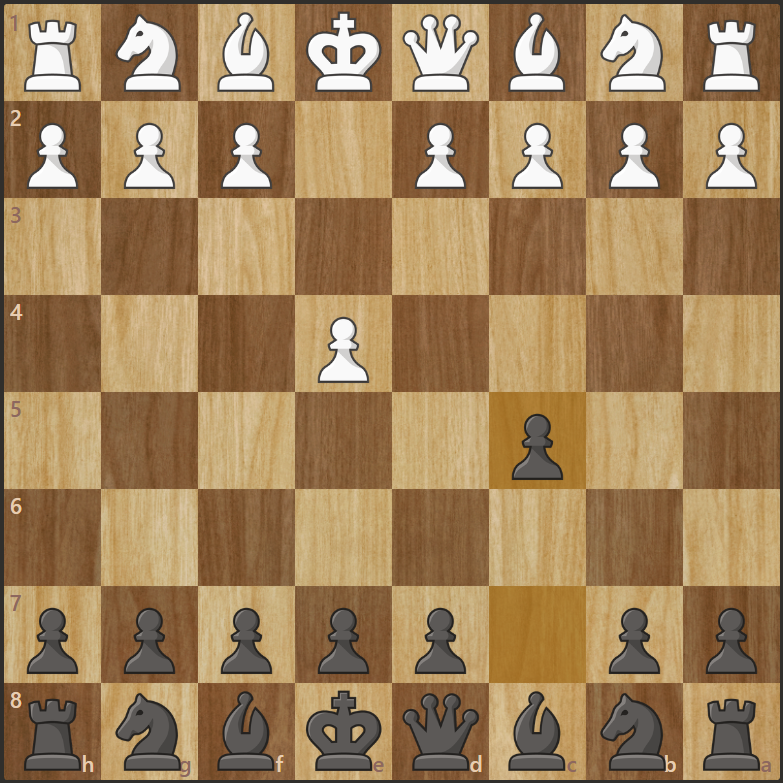
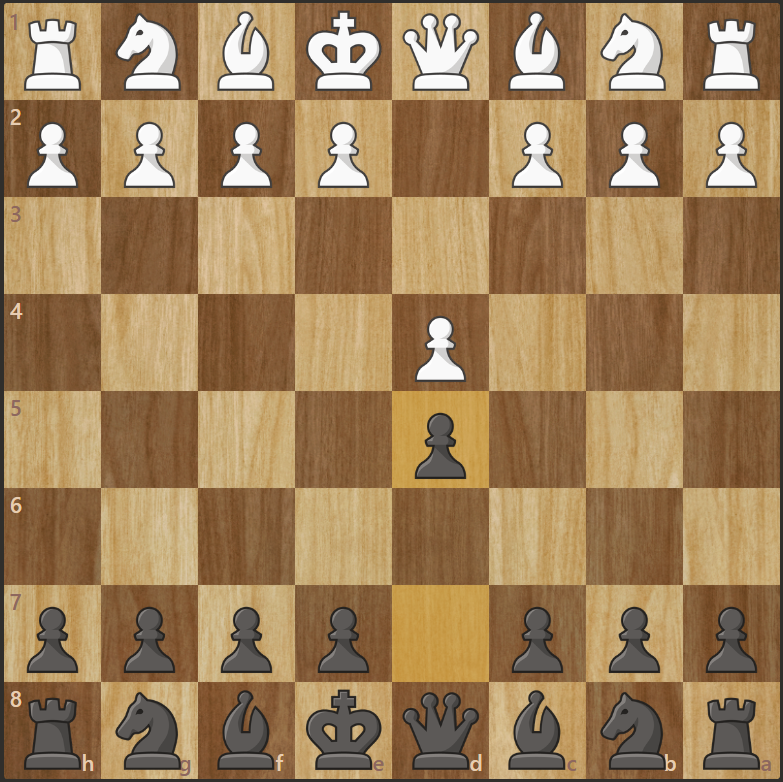
The problem is that opening variations only carry you so far. Somewhere around move 5 or 6, the memorized lines run dry and you are suddenly on your own. I spent obscene amounts of time drilling those early moves into my head that I had not developed the actual habit of reading the board in front of me. I was trying to play from memory instead of from observation.
Every Move is a Commitment
Chess has a way of teaching you something that is easy to say but hard to internalize: actions have consequences, and those consequences compound.
In life, most mistakes are recoverable. That is true in plenty of sports too. You make a bad call, you absorb the hit, and the game goes on more or less intact. Chess does not really work like that. A blunder does not just cost you a piece. It shifts the entire weight of the game. Whether that mistake becomes fatal depends on two things pulling in opposite directions: your ability to reorganize and hold the position under pressure, and your opponent’s ability to recognize the opportunity you handed them and convert it.
That tension is what makes chess so sharp. It is not just about avoiding mistakes. It is about accepting that the board after a mistake is a completely different problem than it was before, and that the only way forward is to engage with the new reality instead of fixating on what you lost, whether that means grinding through a difficult continuation or accepting the loss and resigning.
Moving Past the Plateau
What finally helped me break through 564 was letting go of the idea that the opening was going to carry me. I started treating each position as its own question.
- What is the worst thing my opponent can do right now?
- What do I need to protect?
- What is actually being offered here?
That probably sounds simple, but the shift in practice is real. There is a gap between understanding that chess rewards positional thinking and actually training yourself to stop, breathe, and do it on every single move. Bridging that gap is what finally got me over the plateau.
I am still very much a beginner, as my rating reflects. But breaking through a number I had been stuck under for over a month, on a game I came back to just five weeks ago, feels like more than a stat. It feels like proof that the mindset shift was real.
Now I just have to hold it.
If you play on Chess.com, feel free to add me: chess.com/member/dpsciarr