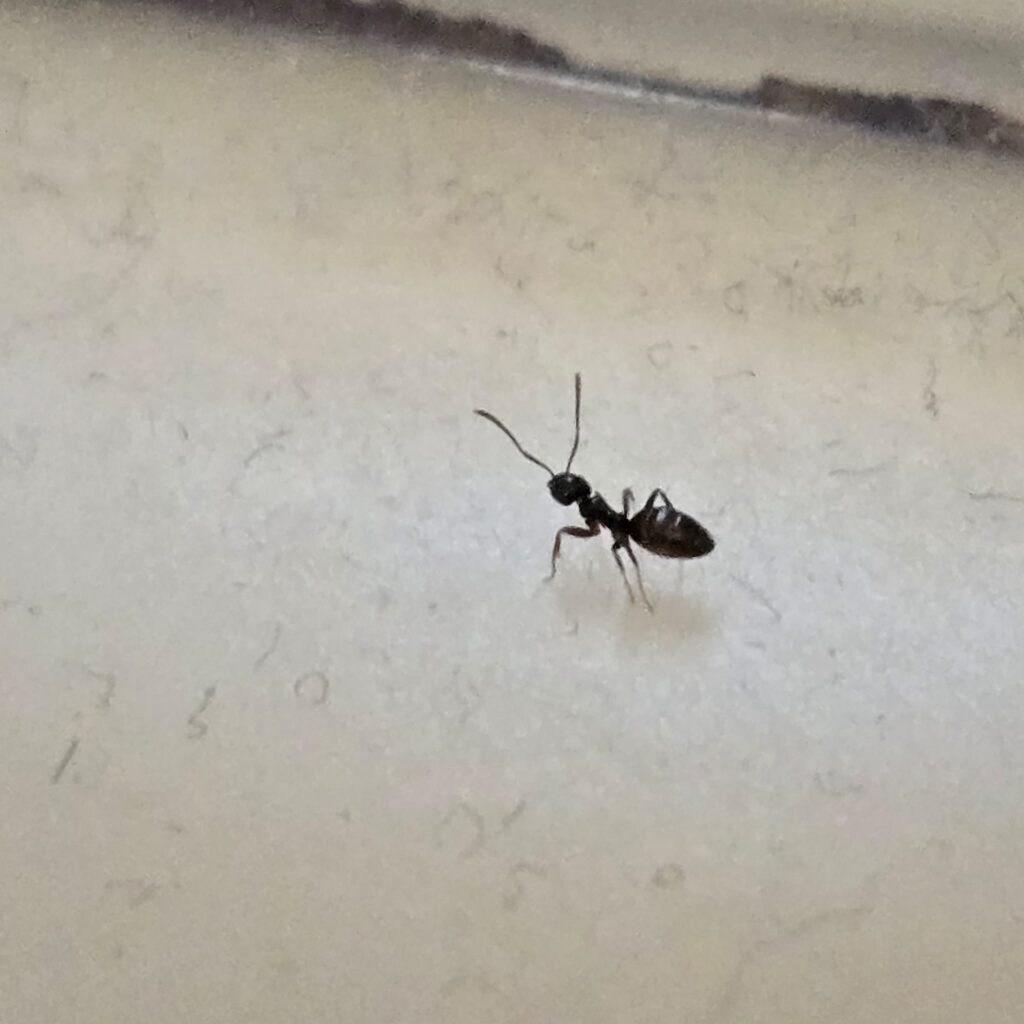
A few days ago I discovered a small number of ants behind my bathroom toilet, specifically underneath a section of lifted floor tile near the wall. They were tiny and dark, moving loosely across the flooring. After a quick Google Lens search they matched the characteristics of the odorous house ant, scientifically known as Tapinoma sessile.
First Signs
The first thing I noticed was a small number of ants appearing seemingly at random near the toilet base. After watching longer, I realized they were emerging from the gap under the lifted tiles. This was a day after we had a relatively large thunderstorm, with lots of rain and wind. There’s a chance these ants relocated from the outside as a result of migrating away from the harsh conditions.
Some observations:
- Small black ants
- Roughly 2.5–3 mm long (tiny)
- Moved in loose but recognizable trails
- More active when the bathroom was quiet and undisturbed
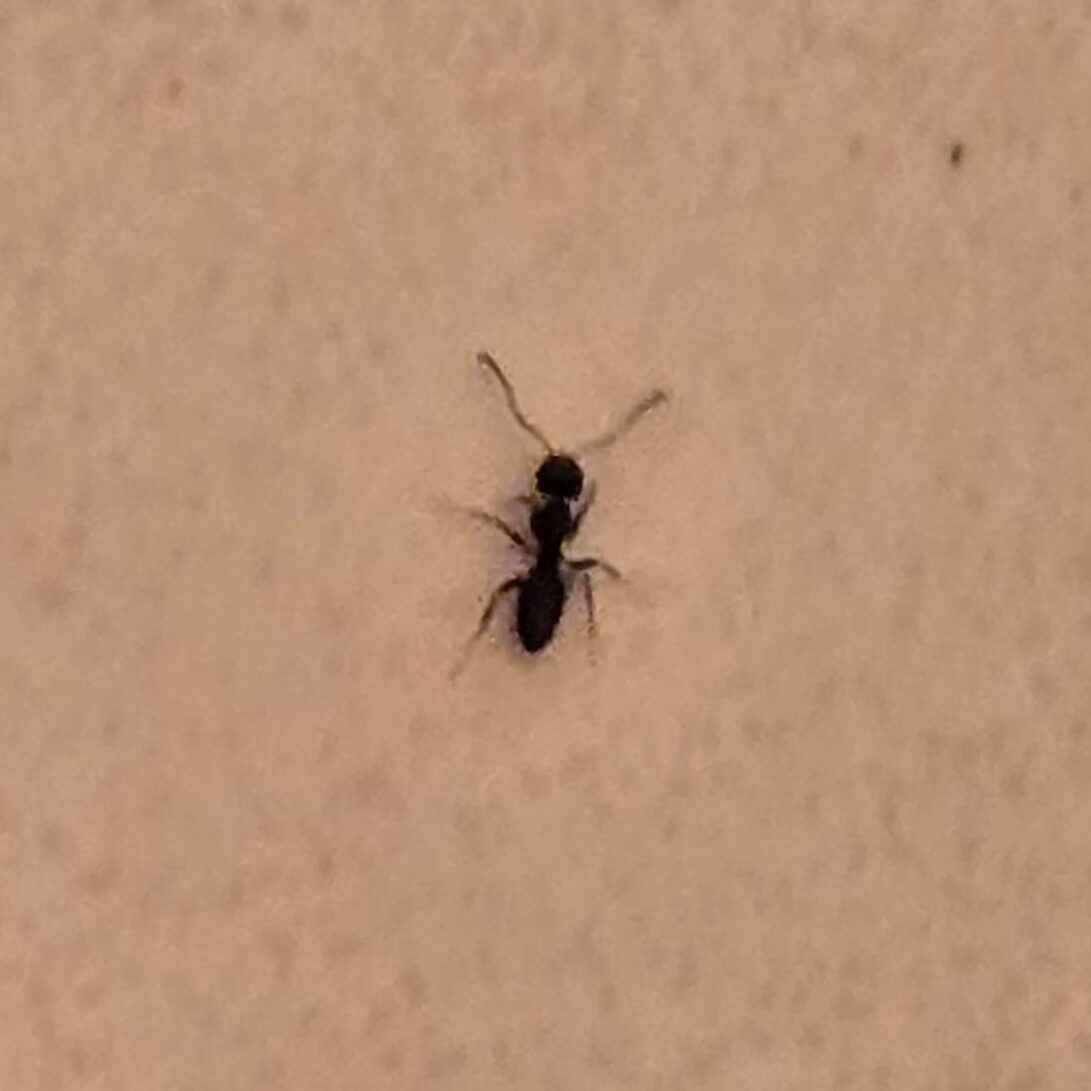
One identifying feature of odorous house ants is the smell they release when crushed, which was confirmed after nabbing 1 or 2 of them with a piece of toilet paper. They let out the smell of a burnt or rotten coconut.
Research
Removal
After doing some research there are a few ways to manage these critters, some obvious, some not so obvious:
- Clean the area
- Fix moisture-related problems, if any
- Use slow-acting baits like sugar baits or gel-based baits
Seems like the best, most effective bait is a sugar-bait mixed with boric acid or borax. If I get to this point, here is the recipe I’ll be using, stirred until dissolved:
Odorous House Ant Liquid Sugar Bait Recipe
- 1 cup warm water
- 1/2 cup sugar
- 1 to 2 teaspoons borax
For the baits to work effectively it’s said to place them on the trails they form from their colony. The goal is for them to take the bait back the colony, which are then exposed to the poison in the bait.
When using the bait, expect activity to temporarily increase as they are attracted to the sugars.
What Not To Do
It’s important not to kill too many ants too quickly, as this particular species adapts to their circumstances very well and can decide to relocate deeper into the walls or flooring. Also, if using spray, do not spray onto the bait.